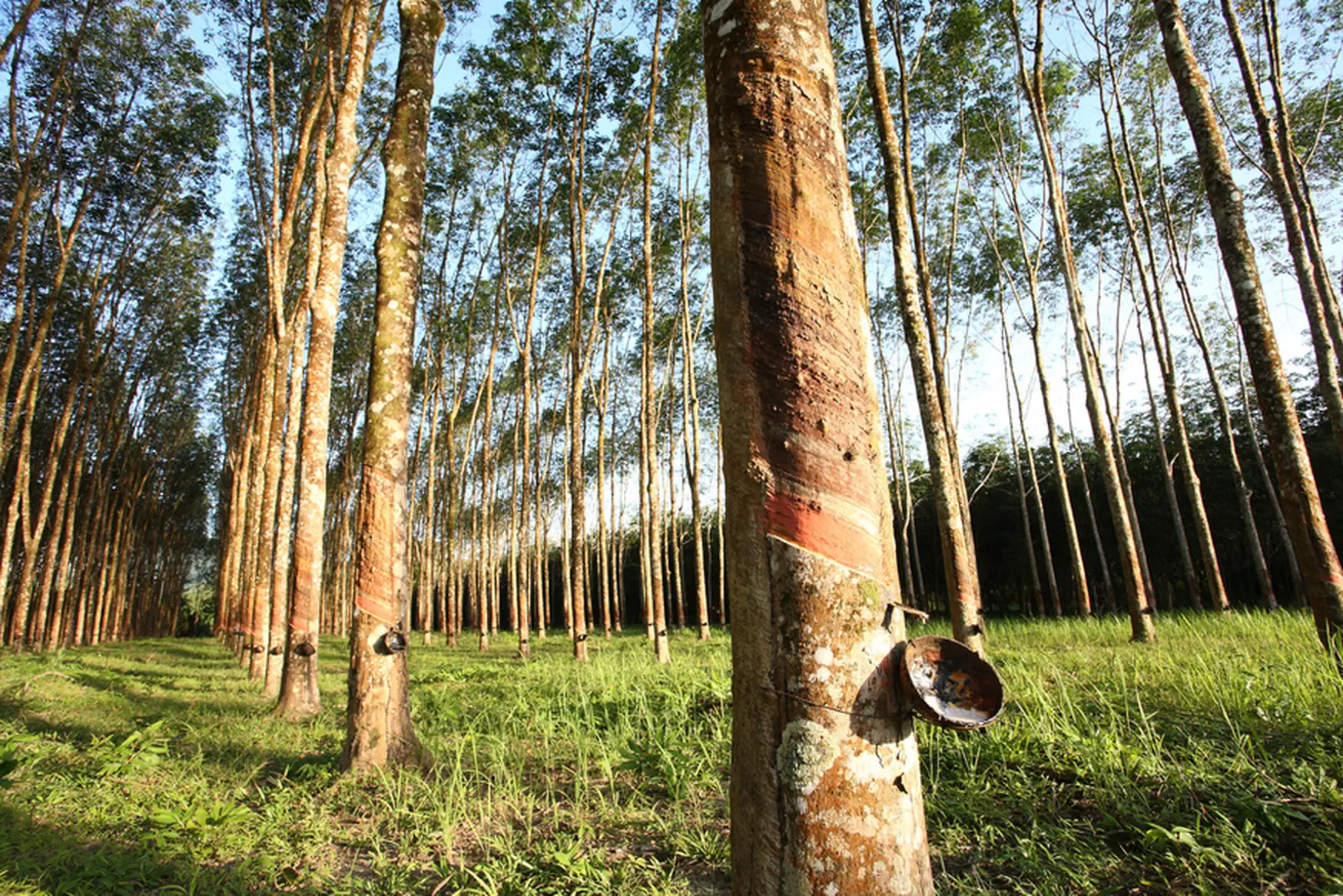
Every piece of natural latex we supply starts the same way: as a milky white sap collected from a rubber tree. Before that sap can become a mattress core, a topper, or a pillow, it has to be harvested, and that first step shapes everything that follows.
What Tapping Actually Involves
Rubber trees are ready for tapping once they reach a certain maturity, typically several years after planting. A thin, angled cut is made into the bark, shallow enough to avoid harming the tree, deep enough to reach the layer where the sap, known as latex, flows. The sap runs slowly down the cut and drips into a small collection cup fastened to the trunk below.
This is a manual, unhurried process. Tapping is usually done early in the day, when sap flow is at its best, and each tree is tapped along a fresh line so the bark has time to heal and regenerate before it is tapped again. A single tree can be tapped this way for many years, which is part of why rubber trees are considered a renewable source of raw material rather than a one-time harvest.
From Cup to Collection
Once the sap has collected in the cup, it is gathered and combined into larger batches. At this stage, the raw material is still a liquid, closer in appearance to a thin, milky paint than to the foam most buyers picture when they think of latex. It has not yet been foamed, cured, or shaped in any way. Everything that gives latex foam its familiar texture, the open cell structure, the springiness, the rows of pinholes, happens in the processing steps that come after harvest.
Why the Harvest Stage Matters to Buyers
For a mattress brand or manufacturer sourcing latex components, the harvest stage is easy to overlook, since it happens well upstream of the finished product landing on a production line. It is still worth understanding:
- Supply is agricultural, not industrial. Because latex starts as tree sap, its supply is influenced by growing conditions and tapping schedules, unlike a purely synthetic material with no agricultural input.
- Quality starts early. Sap collected cleanly and processed promptly tends to produce more consistent foam later on, which is one reason manufacturing partners pay close attention to handling from the moment of collection.
- It is the reason latex is described as natural. Everything downstream, foaming, curing, cutting, and finishing, is a manufacturing process. The raw material itself traces back to this simple, largely unchanged method of tapping a tree.
From Here to Dunlop Latex
Once enough sap has been collected, it moves on to processing, where it is foamed and cured into the dense, resilient material known as Dunlop natural latex, the next stage in how raw sap becomes the foam that ends up in a mattress core, topper, or pillow.
Understanding where the material comes from is one part of choosing a latex supplier. The other part is seeing and feeling the finished product for yourself.