
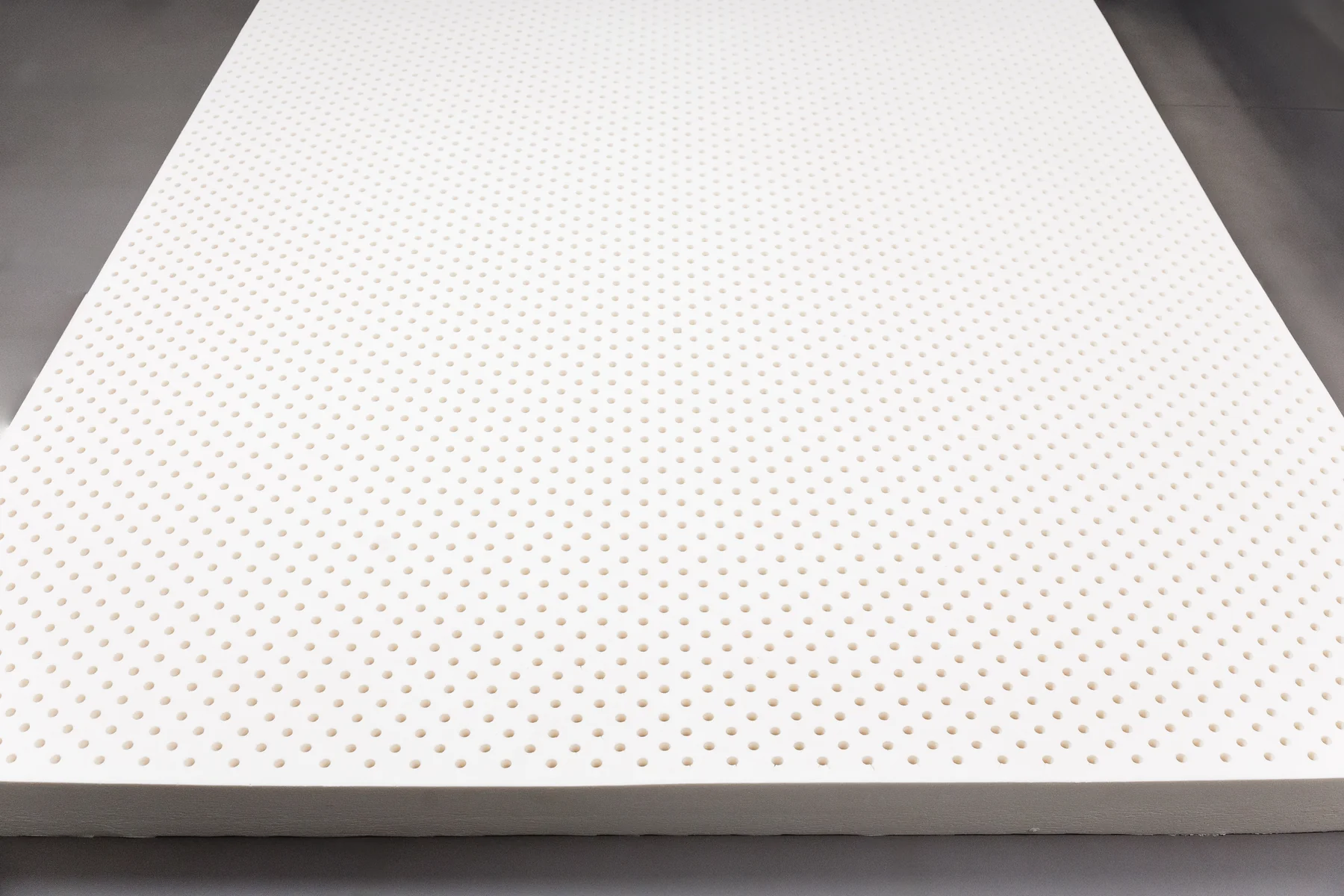
Thickness is usually the first figure a buyer fills in when specifying a latex topper, and often the one given the least thought. It shapes how the topper feels, how much it changes the mattress beneath it, what it costs to ship, and where it sits in your price ladder. Getting it right starts with understanding that thickness never works on its own.
Thickness and Firmness Work as a Pair
A topper’s feel comes from two numbers read together: its thickness and its ILD. ILD tells you how much force it takes to compress the latex. Thickness tells you how much latex there is to compress before the sleeper reaches the surface below.
This is why a soft topper that is too thin can disappoint. A 1” layer at ILD 14 compresses almost fully under a shoulder or hip, so the sleeper still feels much of the mattress underneath. The same ILD at 3” has enough depth to cushion properly before bottoming out. Going the other way, a firm topper at 3” or 4” can noticeably firm up a mattress that feels too soft.
When you compare samples, compare them at the thickness you intend to sell. Judging an ILD at 2” and then ordering it at 4” will give you a different product from the one you tested.
What Each Thickness Typically Does
We supply latex toppers from 1” to 6” thick. As a general guide:
| Thickness | Typical role |
|---|---|
| 1” | A light surface change. Adjusts the top feel slightly without altering the mattress much. |
| 2” | The most common entry point. A noticeable change in surface feel while staying easy to handle and ship. |
| 3” | A clear change in feel. Enough depth for a soft ILD to cushion properly. |
| 4” | Close to a comfort layer in its own right. Often used to reshape the feel of an existing mattress. |
| 5” to 6” | Behaves more like a comfort system than a topper. Heavier, and usually sold at a higher price point. |
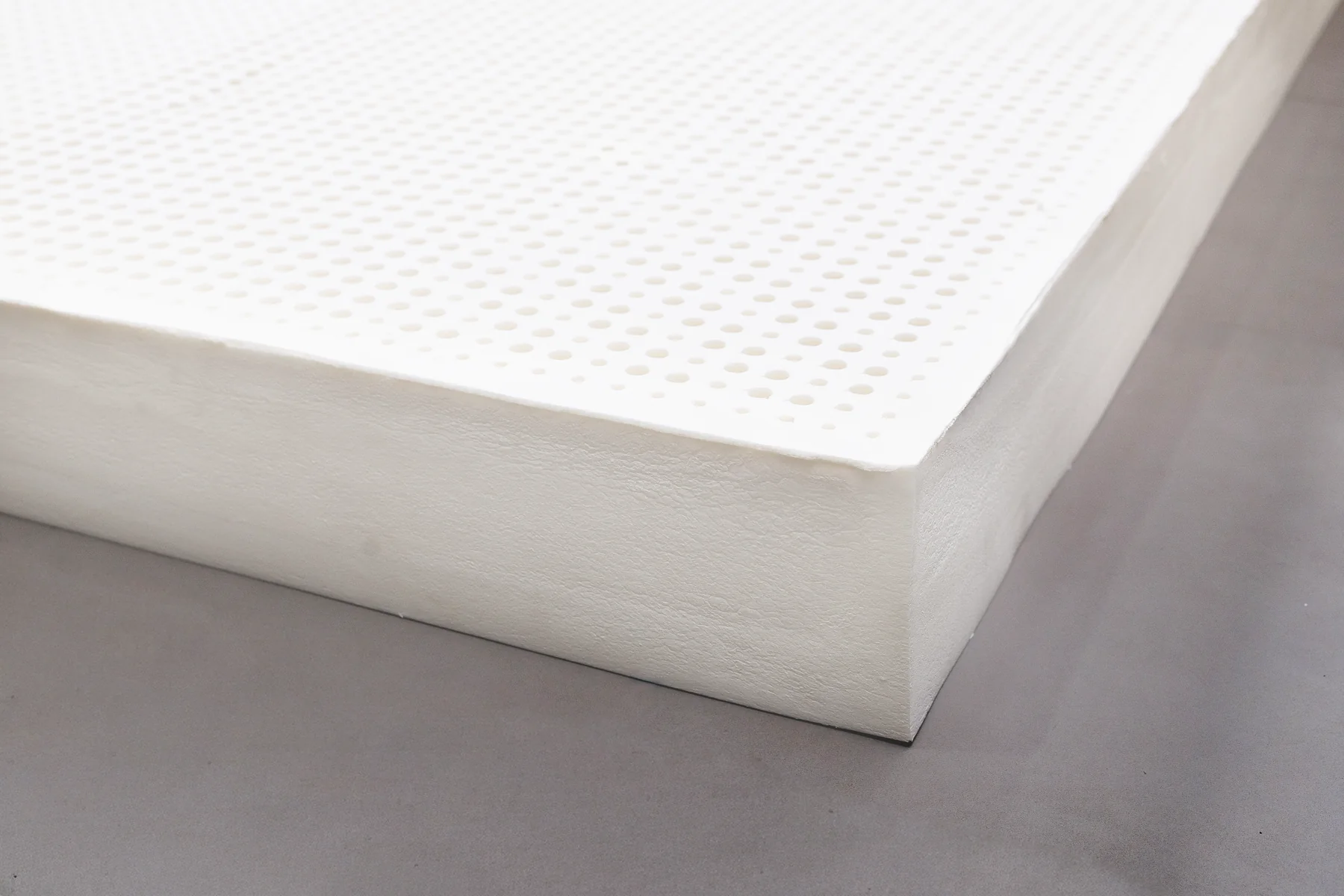
These are starting points, not rules. The right answer depends on the feel you are targeting and on who you are selling to.
The Mattress Underneath Matters
A topper is always used on top of something, and that something changes the result. A firm topper on a very soft mattress can only do so much, because the whole system still compresses under load. A soft topper on a very firm mattress shows its full character, since the base holds steady beneath it.
If you sell toppers to go with your own mattresses, you know the base and can tune the topper to it. If you sell toppers on their own, your customers’ mattresses will vary widely. That usually argues for a moderate thickness, around 2” to 3”, in two or three firmness options, so buyers can pick the direction they want to go.
Practical Factors Beyond Feel
Thickness affects more than comfort:
- Weight. Natural latex is a dense material, and weight rises in proportion to thickness. A 4” topper weighs roughly twice as much as a 2” topper of the same size and density, which affects both freight costs and how easily an end customer can move it.
- Packing. Thinner toppers are easier to roll and box for parcel delivery. Thicker toppers take more carton space and may need a different packing format. Confirm the packing method with your supplier before you set shipping prices.
- Covers. A topper is often sold in a fitted cover. A thicker topper needs a deeper cover, and the finished height should suit the fitted sheets your customers are likely to use.
- Cost. More thickness means more latex. Pricing scales closely with volume, so each extra inch has a direct cost that your retail price has to carry.
Building a Topper Range
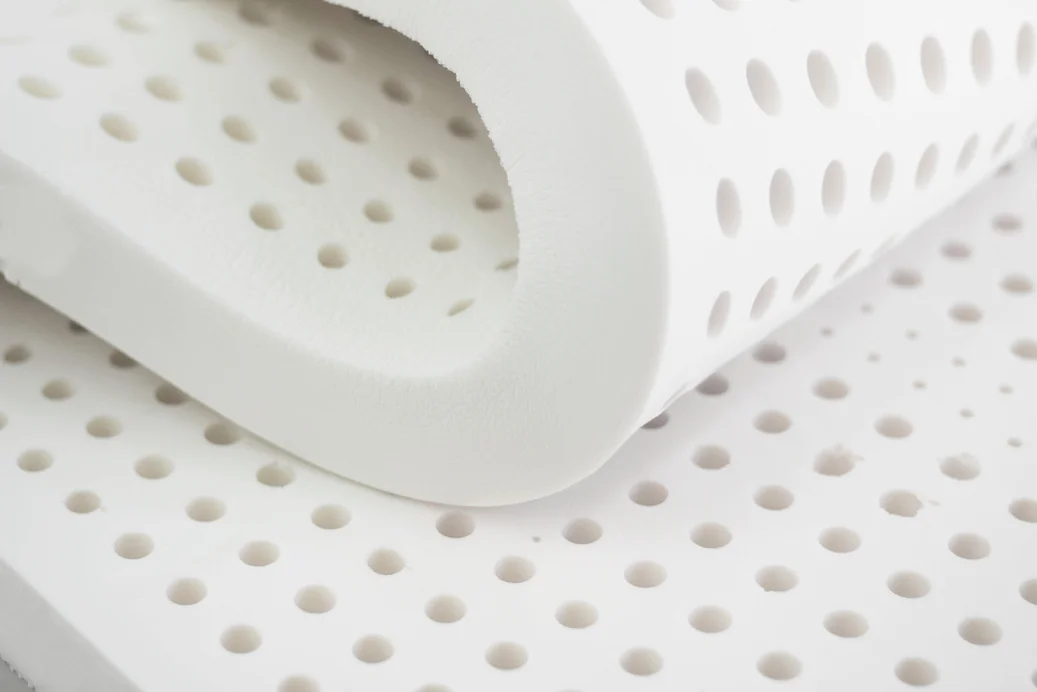
Many brands keep their topper line simple: one or two thicknesses, each offered in a few firmness levels. For example, a 2” and a 3” topper, each in Soft, Medium and Firm, gives customers a clear choice of both how much change they want and which direction to go, without creating too many SKUs to stock.
If you are unsure which thicknesses to carry, start with the question your customers are asking. A buyer who wants a slightly softer surface is usually well served at 2”. A buyer who wants their mattress to feel substantially different is more likely to need 3” or more.
On our firmness scale, toppers are commonly specified from Extra Soft (ILD 12 to 20) through Medium (ILD 24 to 29) for a softer feel, and Firm (ILD 30 to 37) where the aim is to add support. Our firmness guide shows the full scale.
Specify Thickness and ILD Together
When you place an order, give thickness and ILD as one specification, along with the size and any cover or packing requirements. If you are still deciding, the most reliable way to choose is to feel the options side by side, at the thicknesses you plan to sell.
Compare thicknesses in hand before you commit. Request a Free Sample of our natural latex toppers, or request a quote if you already know your specification.