
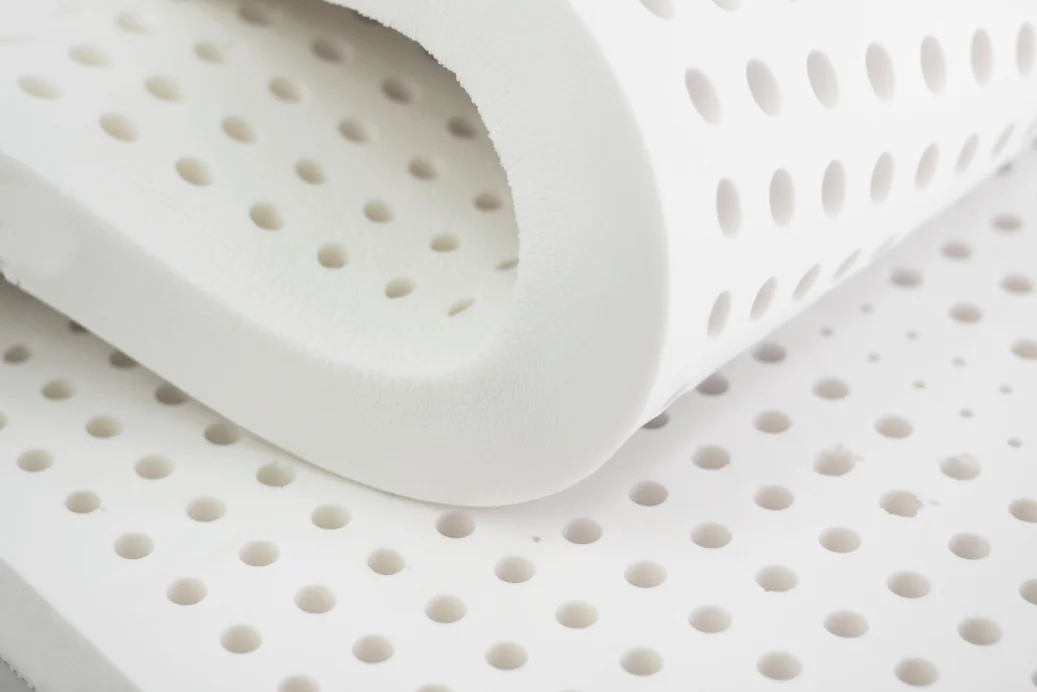
Put a natural latex quote next to a quote for polyurethane foam and the gap is obvious. Natural latex usually costs more than conventional foam, and more than synthetic or blended latex. For a mattress brand, the real question is not whether latex is expensive, but whether it earns its cost in the product you are trying to sell.
What Drives the Cost
Several factors combine to set the price of natural latex:
- The raw material. Natural latex starts as sap from rubber trees. It is an agricultural commodity, so its price moves with harvests, weather and global demand, in a way that petroleum-based foam ingredients do not.
- The amount of material. Latex is dense. A cubic foot of latex contains considerably more material than a cubic foot of typical polyurethane foam, and pricing follows the material.
- The process. Dunlop latex is foamed, poured into a mold, cured, removed, washed and dried. Each of these steps takes time and equipment. Talalay adds vacuum expansion and freezing stages, which is why Talalay components generally cost more than Dunlop.
- Freight. The same density that adds to material cost adds to shipping weight. For brands importing or moving large volumes, freight can be a meaningful share of the landed cost.

None of these costs can be removed without changing the material itself, which is why natural latex rarely competes at the lowest price points.
What the Extra Spend Buys
The case for natural latex rests on how it performs and how it positions your product:
- Feel. Latex is responsive. It pushes back and returns to shape quickly when pressure is removed, which gives a buoyant, springy feel that is distinct from the slow sink of memory foam. If that is the feel you want, few materials reproduce it.
- Airflow. Natural latex has an open-cell structure, and pinholes through the material add further paths for air to move.
- A clear material story. Natural latex gives you a straightforward answer to the question “what is inside?” With proper certifications supporting its natural content, it gives your marketing something verifiable to say.
- Consistency to specification. Latex is ordered against measurable figures such as ILD and density, so you can hold a product to the same feel from one order to the next.
When It May Not Be the Right Fit
Natural latex is not the right choice for every product. If a product line competes mainly on price, the extra material cost may be hard to recover. If your customers are not looking for latex specifically, and your marketing does not explain it, they may not see the difference in value.
Blended latex, which combines natural and synthetic latex, sits in between. It can be a reasonable option for a budget line, as long as it is described accurately. The key is to know what you are buying and to label it honestly. Our guide to natural, synthetic and blended latex covers the differences.
Judge Value per Finished Unit
Comparing materials by price per cubic foot can mislead, because most mattresses do not use latex throughout. What matters is the cost per finished unit, and where the latex sits in the build.
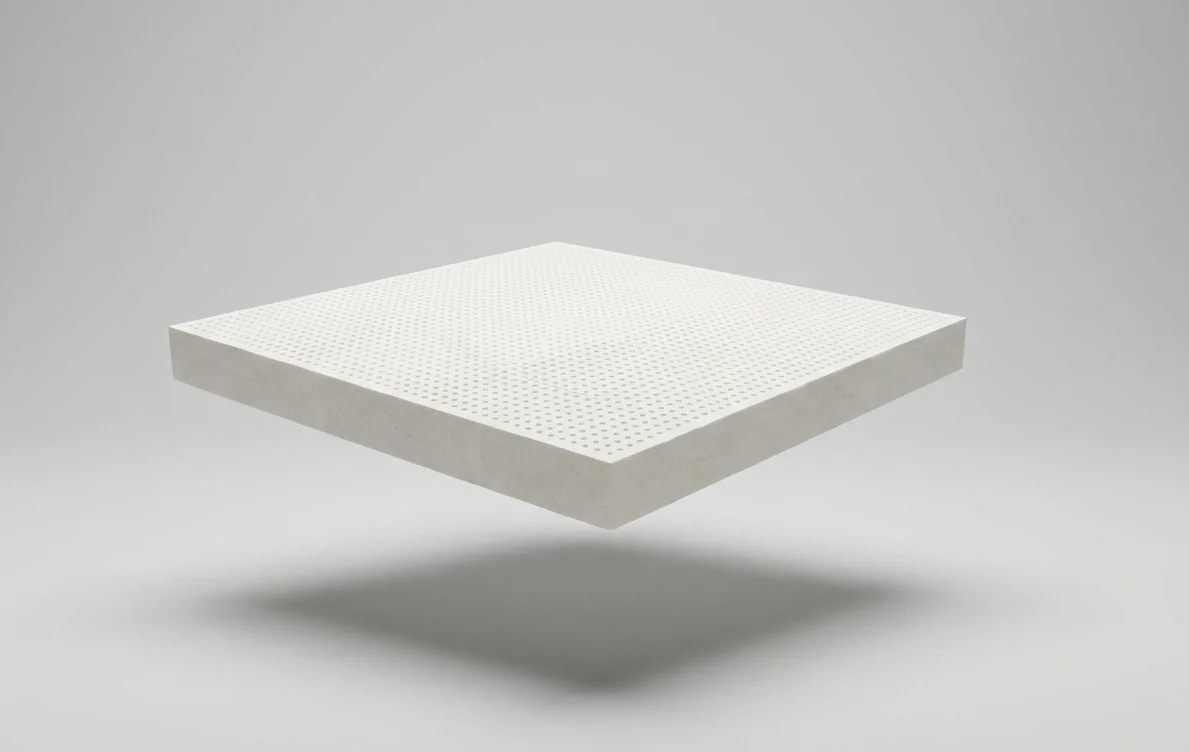
Many brands use natural latex where the sleeper feels it most: a 2” or 3” comfort layer over a foam or coil support system. This puts the latex feel at the surface, where it makes the biggest difference, while keeping the total material cost well below that of an all-latex mattress. Other brands build fully in latex for a premium model, and use hybrid builds for the rest of the range.
A useful exercise is to cost the same mattress two or three ways: all latex, latex comfort layer only, and no latex. Compare the cost difference with the retail price difference you can support. That tells you far more than a per-cubic-foot comparison.
Factor in the Whole Picture
When you compare quotes, look beyond the headline price:
- Is the quote for natural latex, or a blend? Ask for the natural content, and how it is verified.
- Are ILD and density stated, so you are comparing like for like?
- Does the price include packing suited to your channel, such as flat or roll-packed?
- What are the freight terms, and what is the landed cost at your warehouse?
Two quotes that look far apart can end up closer once these points are matched.
See If Latex Fits Your Range
The simplest way to decide whether natural latex is worth it for your product is to feel it, cost it at the thickness you would use, and compare it with your current build.
Put natural latex to the test. Request a Free Sample to evaluate the feel, or request a quote with your specification to see the numbers.