
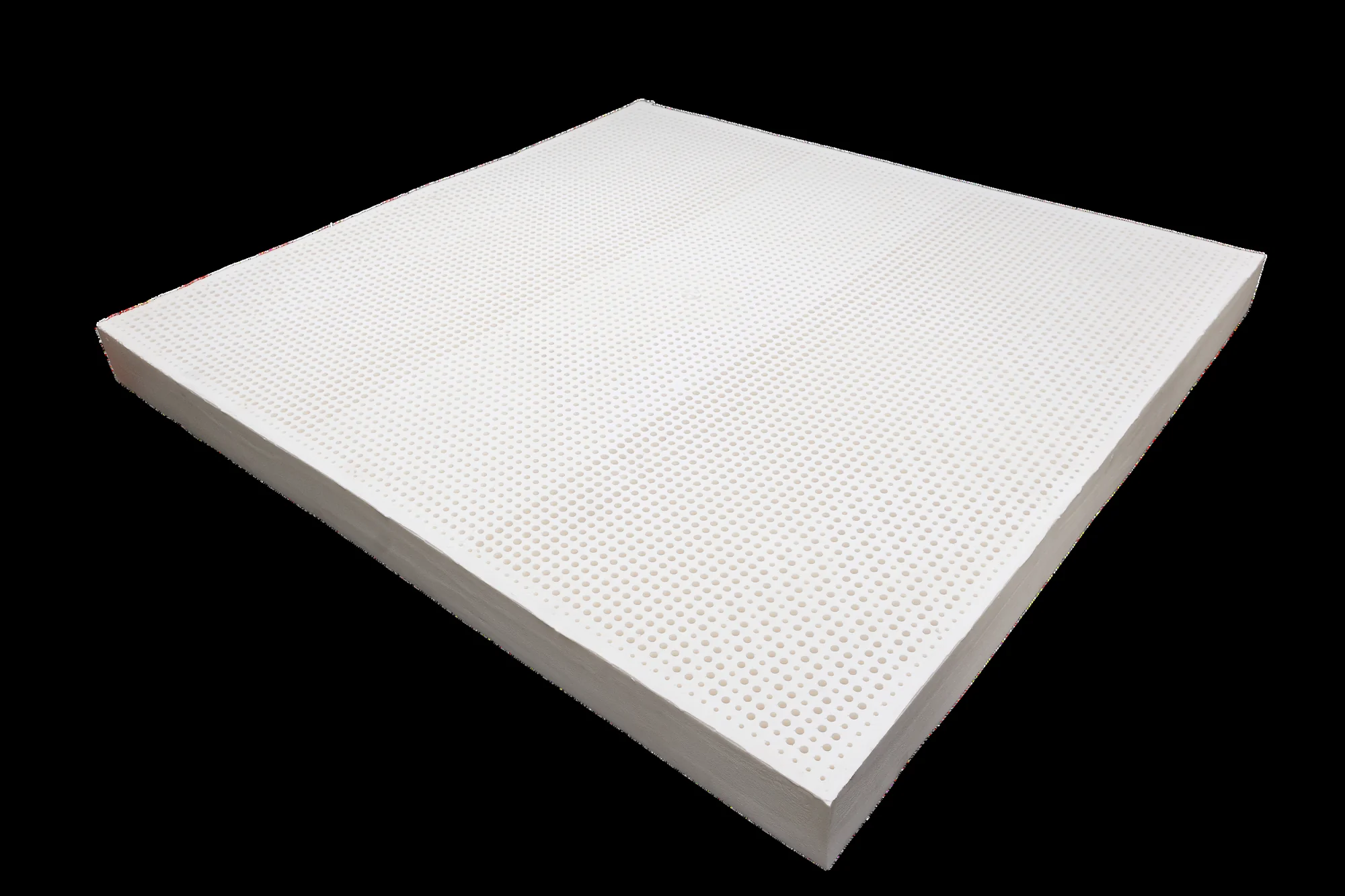
Most problems with a latex core order can be traced back to the specification rather than the latex. A figure that was assumed rather than stated, or a tolerance that was never agreed, can turn into a dispute when the goods arrive. A complete specification protects both you and your supplier, and it makes quotes from different suppliers easier to compare.
Here is what to confirm, in writing, before an order goes into production.
1. Construction
State whether you need a Monozone core, with even firmness across the surface, or a zoned core. For zoned cores such as 5 Zone or 7 Zone, confirm the zone layout and how the head end is marked, so the zones line up correctly when the core goes into the mattress. If you are building from separate layers instead, specify each layer individually.
2. Firmness as an ILD Number
Give firmness as an ILD figure, not only as a word like “medium.” Descriptive terms vary between suppliers, and ILD is the measurable figure. For a zoned core, give the ILD target for each zone. Our ILD guide explains how the figure is measured.
3. ILD Tolerance
This is one of the most commonly missed points. No batch of latex will hit an exact ILD figure across every piece, so ask your supplier to state the tolerance they will hold, either as a plus-or-minus ILD figure or as a percentage, and put it in the order.
Also agree how ILD will be measured: the test method, where on the core the test is taken, and the conditions of the sample. ILD readings can shift with temperature and with the time since production. A core tested straight from a cold container can read differently from the same core tested in a warm room. Agreeing the method in advance avoids arguments over whose measurement is right.
4. Density
State the density alongside the ILD. On our scale, each density is paired with an ILD range, from D55 (Extra Soft, ILD 12 to 20) through D65, D75 and D85 to D95 (Extra Firm, ILD 38 to 45). Density and ILD are related but are not the same thing, so listing both makes the specification unambiguous. See our firmness guide for the full scale.
5. Size and Thickness
Give the exact length, width and thickness in inches, rather than a size name alone. Size names are not always interpreted the same way. For reference, we work to these standard US sizes:
| Size | Dimensions |
|---|---|
| Twin | 38” x 75” |
| Twin XL | 38” x 80” |
| Full | 54” x 75” |
| Full XL | 54” x 80” |
| Queen | 60” x 80” |
| King | 76” x 80” |
| Cal King | 72” x 84” |
| Split Cal King | 36” x 84” |
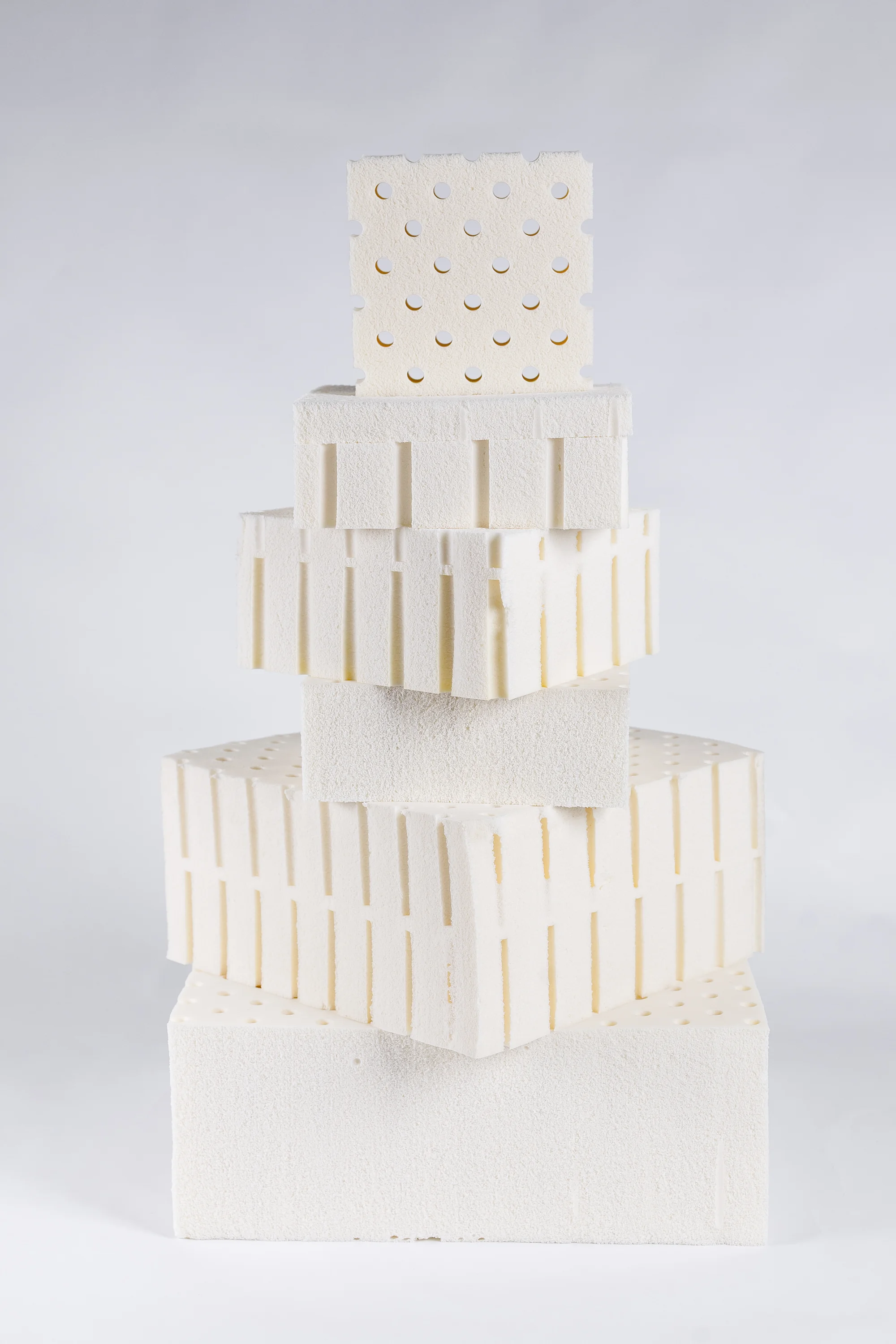
Custom sizes are available on request. If your cover or frame needs a core slightly under or over a standard size, state the exact figure.
6. Dimensional Tolerance
Like ILD, dimensions need an agreed tolerance. Confirm the plus-or-minus allowance for length, width and thickness, and write it into the order.
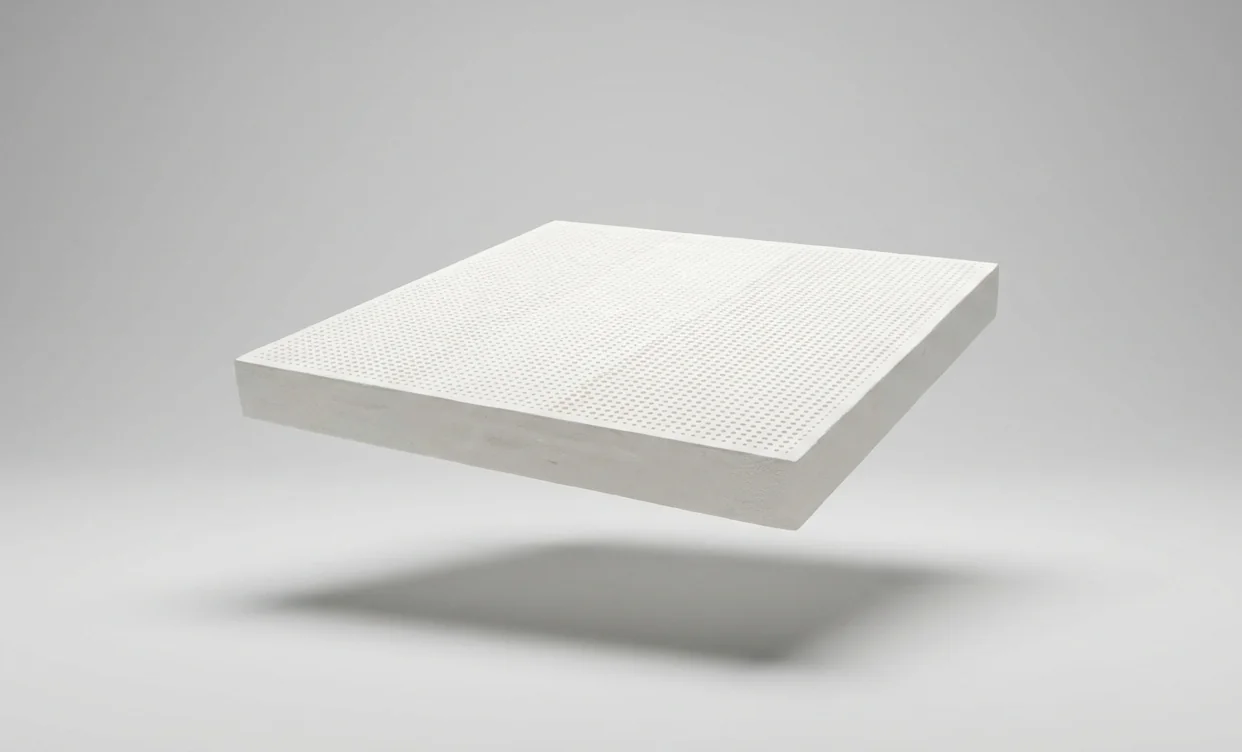
Agree how dimensions will be measured, too. Latex should be measured lying flat, and cores that have been roll-packed or compressed for shipping need time to recover before they are measured. Specify how long that recovery time is, so a core measured straight out of the box is not rejected unfairly.
7. Surface and Pinholes
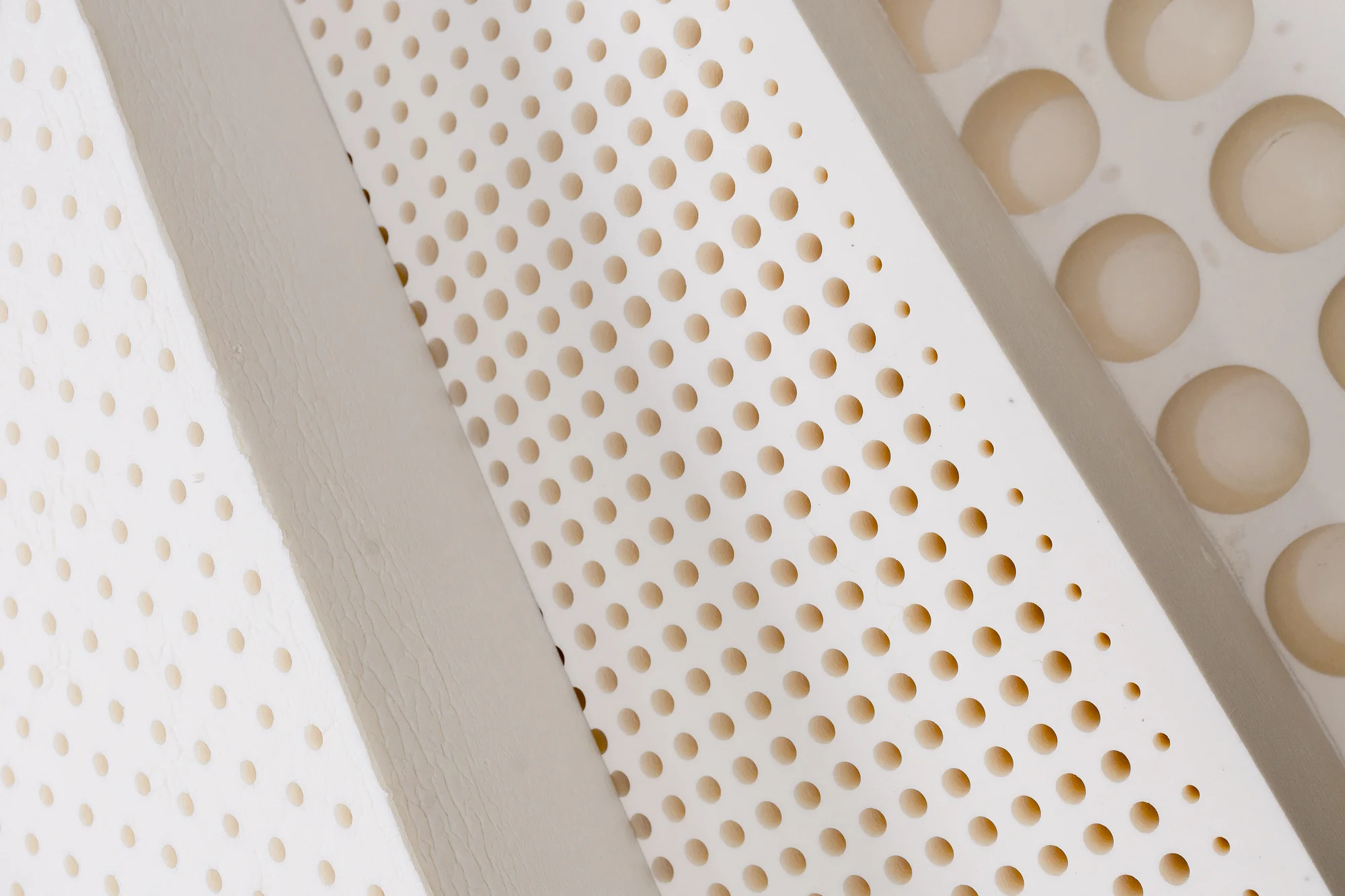
Dunlop cores are typically molded with pinholes. Confirm the pinhole pattern and which side faces up, particularly if the surface finish matters to your assembly or your cover design.
8. Material Content and Documentation
State that you require natural latex, and ask for the natural latex content and how it is verified. Request copies of any certifications you plan to mention in your own marketing, so that your claims are supported by documents. Our certifications page shows what our manufacturing partners hold.
9. Packing, Labeling and Lead Time
Confirm whether cores will ship flat or roll-packed, how they will be protected, and how each piece will be labeled with its size, ILD and zone orientation. Agree the lead time and the delivery terms. For smaller orders, selected Monozone cores are held in our US warehouse stock.
10. An Approved Reference Sample
Before production, approve a sample against your specification and keep it as a reference. If a question comes up after delivery, a signed-off sample gives both sides a physical benchmark to compare against, which is far easier than arguing over a description.
A Simple Rule
If a figure matters to you, write it down and agree the tolerance. A specification that covers all ten points above leaves little room for surprises when the goods arrive.
Ready to specify your next order? Request a quote with your specification, or request a free sample to confirm the feel before you commit.