
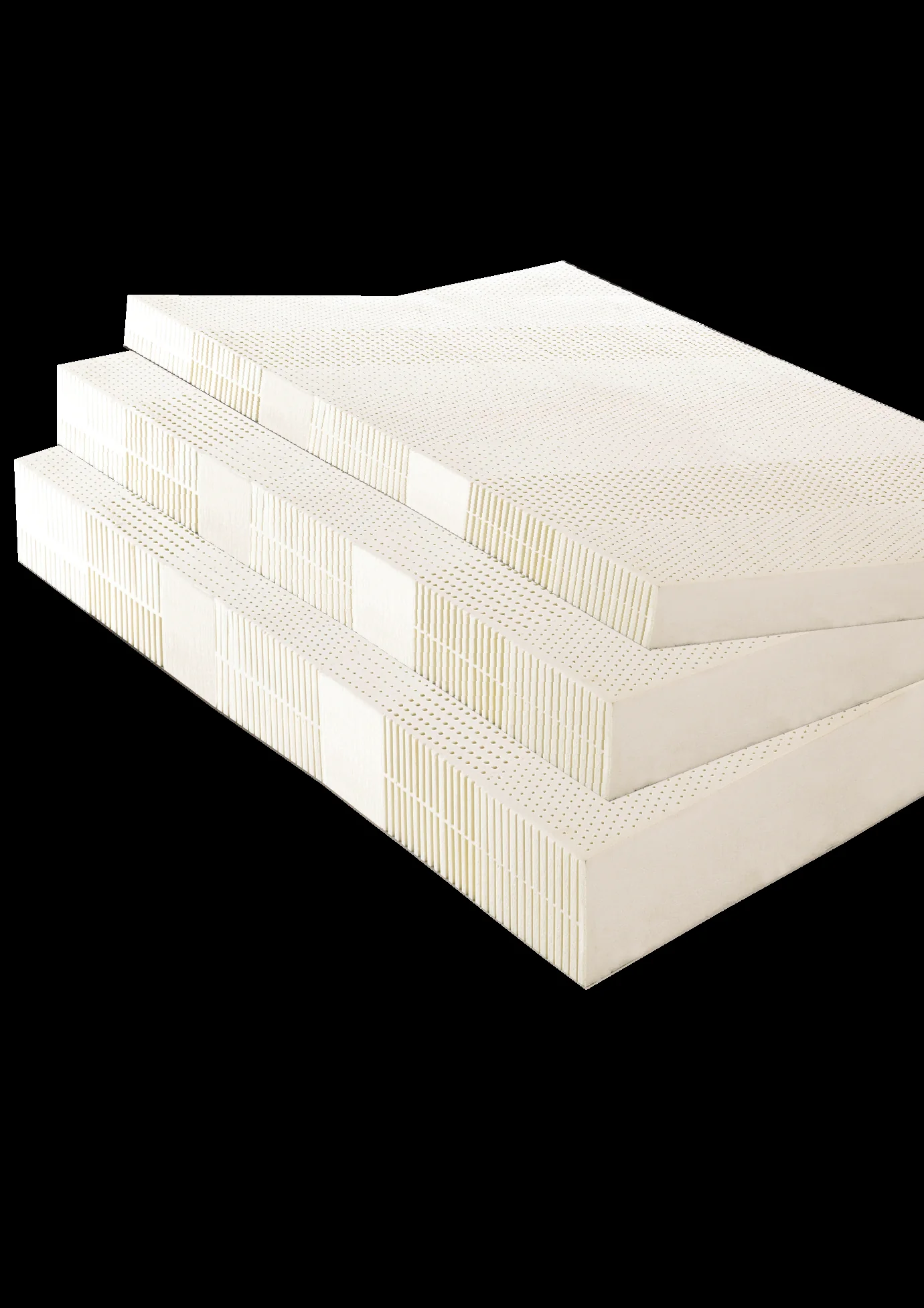
A buyer orders two batches of “medium” latex, one from each of two suppliers, and finds they feel noticeably different. Both suppliers insist their product is medium. Both spec sheets list a density. So what went wrong?
This is the question we are asked most often, and the answer nearly always comes back to the same point: density and ILD are two different measurements. They are related, but they do not describe the same property, and a label like “medium” does not pin down either of them.
What Density Measures
Density is the mass of the foam per unit of volume. On latex spec sheets it is often shown as a D grade, such as D65 or D85. A higher density means there is more material packed into the same space.
Density tells you about the substance of the piece: how much latex it contains, how heavy it will be to handle and ship, and how much material is supporting the load. What it does not tell you directly is how the foam feels when someone presses into it.
What ILD Measures
ILD, or Indentation Load Deflection, measures how much force it takes to compress a foam sample by 25 percent of its thickness under a standardized test. A higher ILD means more force is needed, so the foam feels firmer. For a fuller explanation of the test, see ILD Explained: How to Choose Latex Firmness.
ILD is a direct measure of resistance to pressure. Of the two figures, it is the one that tells you most about feel.
Why They Usually Travel Together, but Not Always
Within a single Dunlop process, firmer latex is generally denser. To make a Dunlop layer firmer, more material goes into it. That is why our firmness scale pairs each ILD band with a density grade, from D55 at ILD 12 to 20 up to D95 at ILD 38 to 45. For our own range, the two figures move together.
Across different processes and formulations, that link loosens. Talalay latex goes through additional vacuum expansion and freezing steps that give it a lighter, more open cell structure, so it typically reaches a given ILD at a lower density than Dunlop. Neither result is better in every case. They are simply different materials, and the numbers reflect that. We compare the two processes in Dunlop vs Talalay Latex.
Formulation matters too. Our graphite infused Dunlop latex at D55 gives a softer feel than standard D55 latex, which is covered on our soft latex page. Same density grade, different feel.
Other Reasons Two Medium Layers Feel Different
Even when the density and the process are the same, several other factors can separate two layers that share a label:
- The label itself. As we explain in Firm, Medium, Soft: What Those Words Actually Mean in ILD, each supplier places “medium” within its own range.
- Position within the band. A medium band on our scale runs from ILD 24 to 29. A layer at 24 and a layer at 29 are both medium, but the difference is noticeable.
- Thickness. The same ILD feels different in a thin layer than in a thick one, because a thicker layer has more depth to compress before the hand or body meets what is underneath.
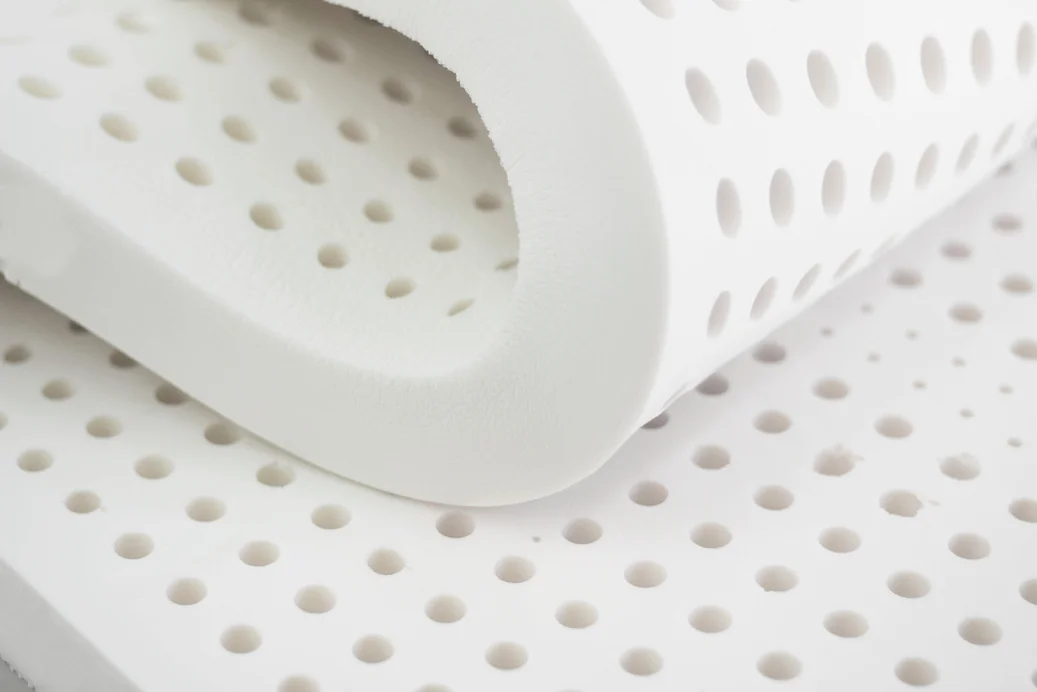
- Pinhole pattern. The size and spacing of pinholes affect how the surface responds to pressure.
- The surrounding build. A layer placed over a firm core feels different from the same layer placed over a soft one, and the cover changes the feel as well.
- Test conditions. ILD readings can shift with temperature, humidity and the time since production, so figures tested under different conditions may not compare directly.
A Warning Sign When Comparing Suppliers
If a supplier quotes only a density, with no ILD, treat it as a warning sign. A density figure alone does not tell you how the layer will feel, and it leaves room for two products with the same D grade to arrive with quite different firmness. It can also make quotes look more comparable than they are, since a lower price at the same density may reflect a different ILD.
Always ask for both figures. A supplier who knows its product should be able to give you the target ILD, the density, and the tolerance it works to for each.
What to Put on a Purchase Order
To avoid the two-mediums problem, specify each layer with:
- Target ILD and tolerance, agreed before production.
- Density, so you know how much material you are paying for.
- Thickness and size.
- Process, such as Dunlop, if it matters to your product.
Never order against a label alone. For a full checklist of what to include when ordering cores, see What to Specify When Ordering Latex Cores.
Check It in Hand
Figures narrow down the options, but a side-by-side comparison of samples is the quickest way to confirm that two layers really do feel the way their numbers suggest.
Compare density and feel for yourself. Request a Free Sample to test our latex against what you currently use, or request a quote with your target ILD and density.