
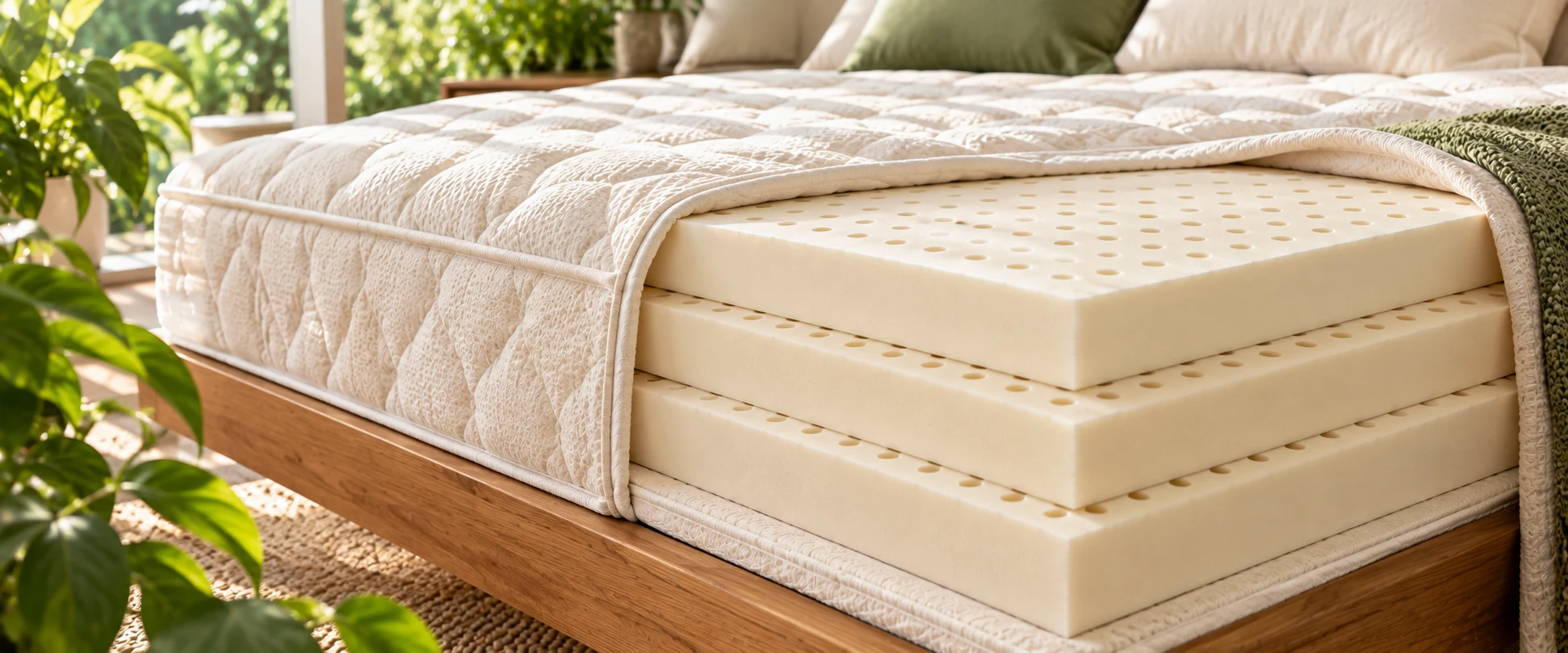
There is no single correct firmness for latex, only the right firmness for the job a particular layer is doing. When you plan a build, the most useful question is not “how firm should our latex be?” but “what is each layer in this product for?”
This guide works through the four roles latex most often plays in a bedding product, and where each one usually sits on our firmness scale:
| Feel | ILD Range | Density |
|---|---|---|
| Extra Soft | 12-20 | D55 |
| Soft | 18-23 | D65 |
| Medium | 24-29 | D75 |
| Firm | 30-37 | D85 |
| Extra Firm | 38-45 | D95 |
The ranges below are common starting points, not fixed rules. Your target feel, the rest of your construction and your customers will all shape the final choice.
Toppers
A topper sits on top of a finished mattress and changes how its surface feels. Most toppers are specified in the Extra Soft to Medium range, roughly ILD 12 to 29, because their usual purpose is to add a softer or more cushioned surface to a mattress that already has its own support.
Firmer toppers exist, but they are the exception. Thickness and firmness work together here: a thicker soft topper changes the feel more than a thin one at the same ILD. We cover that balance in How Thick Should a Latex Topper Be?
Comfort Layers
A comfort layer is the top latex layer inside a mattress, directly under the cover. Like a topper, it is the part of the build a customer feels first, so it is usually specified in the Extra Soft to Medium range.
The difference from a topper is that a comfort layer is designed as part of the build from the start. Its firmness can be chosen specifically to suit the transition layer and core beneath it, rather than to adjust an existing mattress.
Transition Layers
A transition layer sits between the comfort layer and the core. Its job is to bridge the two, so that the change from a soft top to a firm base is gradual rather than abrupt. Transition layers are usually specified in the Medium to Firm range, around ILD 24 to 37.
Not every build needs one. A two-layer construction can work well when the comfort layer and core are close enough in firmness. When the gap between them is large, a transition layer helps the whole mattress feel like one product rather than two separate materials stacked together.
Cores
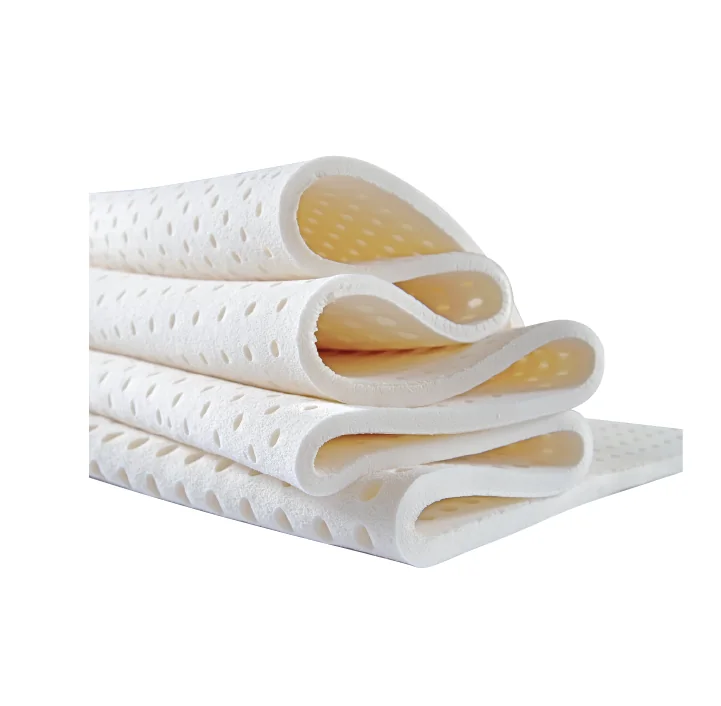
The core is the base of a latex mattress. It carries the load and sets the overall character of the finished product. Cores are usually specified in the Firm to Extra Firm range, around ILD 30 to 45, with Medium used for softer overall builds.
Zoned cores take this a step further by using different ILD targets across sections of the same core, typically softer in some areas and firmer in others. We supply cores in Monozone, 5 Zone and 7 Zone constructions. For the choice between a single core and a layered build, see Latex Mattress Cores Explained: One Layer or Three.
Why a Core and a Topper Should Not Share an ILD
A layered latex build works by getting progressively firmer from the top to the bottom. Each layer has a different job, and its firmness reflects that job. When a core and a topper share the same ILD, one of them is almost always doing the wrong job.
- A topper at core firmness adds height, but changes very little about how the surface feels. The customer pays for an extra layer and notices little difference.
- A core at topper firmness does not provide a stable base. The layers above it have nothing firm to rest on, and the mattress can lose its intended shape under load.
The same principle applies within a mattress. If the comfort layer and core are the same firmness, the build behaves like a single thick layer, and the benefit of layering is lost.
A Worked Example
Consider a three-layer latex mattress built from the top down:
- Comfort layer: Soft, ILD 18 to 23
- Transition layer: Medium, ILD 24 to 29
- Core: Firm, ILD 30 to 37
Each step up the scale is one level, so the feel changes gradually from the surface to the base. A customer who wants a softer overall feel might move the comfort layer to Extra Soft, ILD 12 to 20, and keep the rest of the build the same. One who wants a firmer mattress might move the core to Extra Firm, ILD 38 to 45.
The layer thicknesses for your build depend on your design and the total height you are aiming for, and are best confirmed with prototypes.
Test the Full Stack
Firmness choices interact. The best way to confirm a build is to assemble samples of each layer in the order you plan to use them and assess the full stack, rather than judging each layer on its own.
Planning a new build? Request a Free Sample across the firmness levels for each layer, or request a quote with your full construction and target ILDs.